हिन्दी
- English
- Español
- Português
- русский
- Français
- 日本語
- Deutsch
- tiếng Việt
- Italiano
- Nederlands
- ภาษาไทย
- Polski
- 한국어
- Svenska
- magyar
- Malay
- বাংলা ভাষার
- Dansk
- Suomi
- हिन्दी
- Pilipino
- Türkçe
- Gaeilge
- العربية
- Indonesia
- Norsk
- تمل
- český
- ελληνικά
- український
- Javanese
- فارسی
- தமிழ்
- తెలుగు
- नेपाली
- Burmese
- български
- ລາວ
- Latine
- Қазақша
- Euskal
- Azərbaycan
- Slovenský jazyk
- Македонски
- Lietuvos
- Eesti Keel
- Română
- Slovenski
- मराठी
- Srpski језик

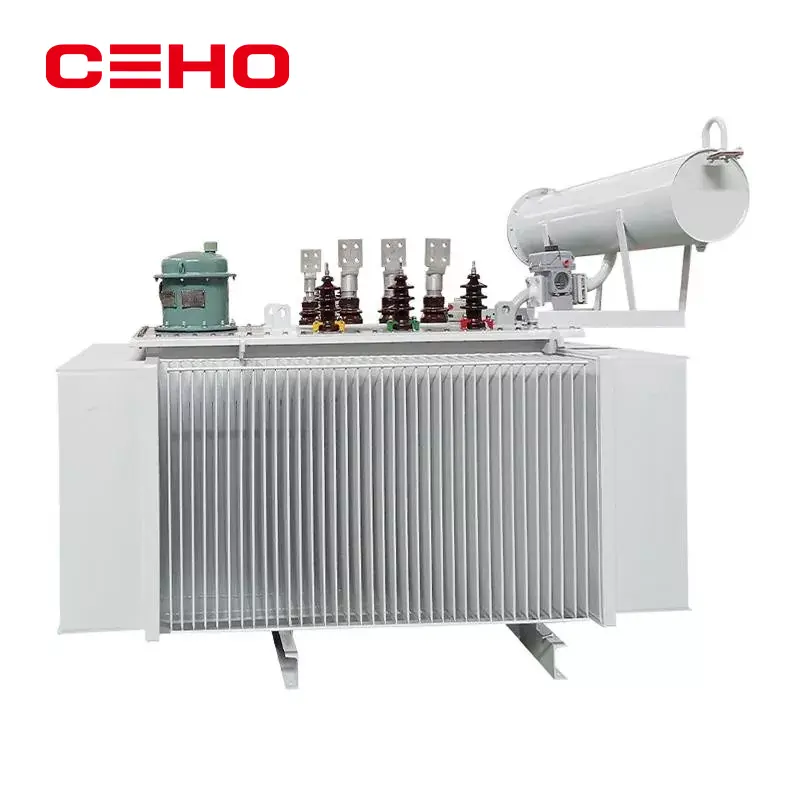
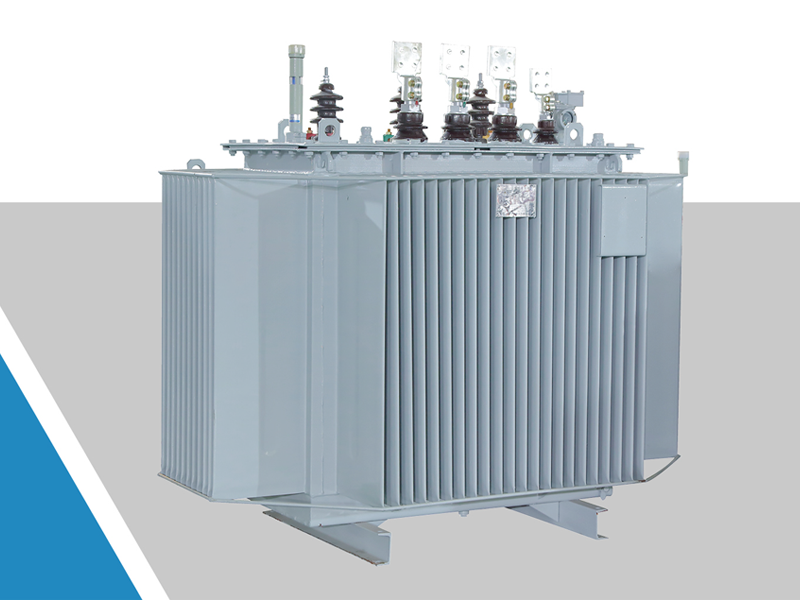
What is an amorphous alloy distribution transformer?
Simply put, an amorphous alloy distribution transformer is a distribution transformer whose core material uses "amorphous alloy" instead of traditional silicon steel sheets. It has only one core goal: to significantly reduce the power loss of the transformer itself.
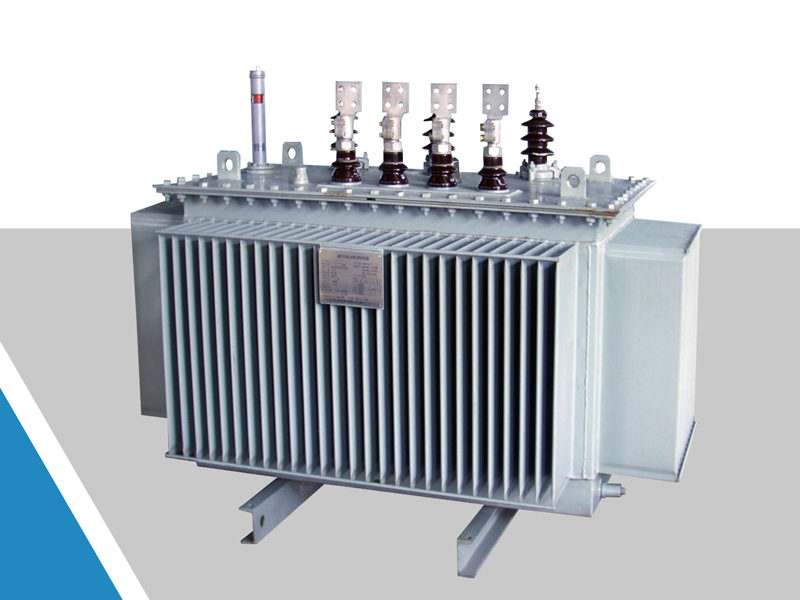
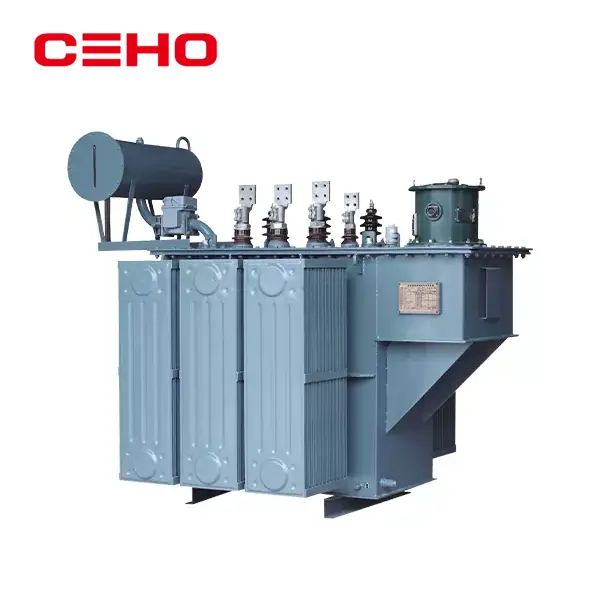
( click on the image to view the amorphous alloy distribution transformer )
I. First understand why transformers have losses
The function of the distribution transformer is to convert 10 kV high-voltage electricity into 220-volt low-voltage electricity for residential use. This process itself has energy losses, which are mainly divided into two categories:
- Copper loss: the loss caused by heating when current flows through the coil, related to the load size
- Iron loss (no-load loss): As long as the transformer is powered on, the iron core will be magnetized and demagnetized repeatedly, which consumes energy in the process. Iron loss is uninterrupted 24 hours a day
Traditional transformers use silicon steel sheets as the iron core, which needs to overcome large resistance during magnetization, so the iron loss is high. The emergence of amorphous alloy materials is to solve this problem.
II. What kind of material is amorphous alloy?
Amorphous alloy is a metal material in which the atoms are arranged in a disordered state.
The atoms of ordinary metals (such as silicon steel) are regularly arranged, like neatly stacked bricks. This is called "crystalline". During the production of amorphous alloys, the molten metal is rapidly solidified at a cooling rate of about 1 million degrees Celsius per second. The atoms are "frozen" before they can be arranged in order, forming a disordered structure similar to glass.
The characteristics brought by this disordered structure are: magnetization is extremely easy and hysteresis loss is extremely low.
III. Core advantages: Excellent energy saving and environmental protection benefits
The core reason why amorphous alloy distribution transformers have attracted much attention lies in their disruptive energy-saving performance. Compared with traditional silicon steel transformers, its advantages are mainly reflected in the following aspects:
1. Extremely low no-load loss: Due to the extremely high magnetization and demagnetization efficiency of amorphous alloy materials, its iron loss (i.e. no-load loss) is significantly reduced by 70% to 80% compared with traditional silicon steel transformers, and the no-load current is also reduced by about 85%. This means that when the transformer is energized but not loaded, it consumes very little power of its own.
2. Significant environmental benefits: The reduction in losses directly translates into a reduction in power generation demand and greenhouse gas emissions. According to estimates, if amorphous alloy transformers are fully applied in the distribution networks of large developing countries such as China and India, 25 to 30 terawatt hours (TWh) of electricity can be saved each year and carbon dioxide emissions can be reduced by 20 to 30 million tons.
3. High safety and reliability: Amorphous alloy transformers usually adopt fully sealed structures and corrugated oil tank designs, which are not only maintenance-free but also have excellent short-circuit resistance. Its insulation material has good heat resistance and low operating temperature rise, which effectively delays insulation aging. Its service life can usually reach more than 20 years. In addition, dry-type amorphous alloy transformers are non-combustible, explosion-proof, do not produce toxic gases, and are extremely safe.
IV. Structural Characteristics and Manufacturing Process
In order to give full play to the performance of amorphous alloy materials, amorphous alloy transformers also have their own unique features in design and manufacturing:
Special iron core structure: The amorphous alloy strip is extremely thin (thickness is only about 0.03 mm) and has high hardness, making it difficult to cut like silicon steel sheets. Therefore, its core is usually composed of four separate core frames juxtaposed to form a three-phase five-column layout, and adopts a rolling process to reduce shear damage to the material's magnetic properties.
Stress sensitivity and annealing treatment: Amorphous alloys are very sensitive to mechanical stress, and stress will cause a sharp increase in loss. Therefore, the iron core must be avoided as the main load-bearing part in the structural design, and the iron core must undergo strict annealing after rolling to eliminate internal stress and restore its low loss characteristics.
Rectangular cross-section winding: In order to match the shape of the core frame, the windings usually adopt a double-layer or multi-layer rectangular layer structure with a rectangular cross-section, making the overall design more compact.
V. How does it work?
The working principle is the same as all transformers: electromagnetic induction. The high-voltage coil and the low-voltage coil are wound on the same iron core, and voltage conversion is achieved through an alternating magnetic field.
The only difference is the core material. The amorphous alloy iron core is composed of layers of extremely thin (about 0.025~0.03 mm thick) amorphous strips. These strips are usually about 170 mm wide and shaped like a flat ring.
Because the magnetization resistance is extremely small, even if it runs without load for a long time, the iron core itself consumes very little electrical energy.
VI. Where is it mainly used?
Anywhere where 24-hour power supply is required and the load rate is not high or unstable, amorphous alloy transformers are very suitable:
- Urban and rural distribution network: Rural areas have small power loads and long no-load times, and the energy-saving effect is most obvious.
- Residential area: During the low power consumption period at night, the transformer is in a light load state for a long time
- Data centers and communication base stations: operate year-round and are highly sensitive to electricity costs
- New energy stations: Photovoltaic and wind power generation times are discontinuous, and transformers are often lightly loaded.
- Subways, airports, hospitals: require continuous power supply and have strict requirements on energy consumption.
VII. Summary
Amorphous alloy distribution transformers are energy-saving distribution equipment that use a special metal material that is easier to magnetize as the core, so that the transformer can "steal" less electricity in standby mode. Its initial purchase cost is higher, but because it saves electricity every day, it can pay for itself in a few years, and it will be a net profit for more than ten years.
सम्बंधित खबर
- Why can three-dimensional wound core transformer achieve low noise and energy saving?
- Why can't dry-type transformers be stored and transported upside down for a long time?
- What are the methods and steps for wiring dry-type transformers?
- What Makes the “Heart” of the Power System Beat Steadily?
- Why is my oil-immersed transformer overheating?
- How can the lifespan of distribution transformers be extended through routine maintenance?
मुझे संदेश दे देना